The Four-Week Desk Reset: A Paper Clutter Plan for People Who Will Never Go Paperless
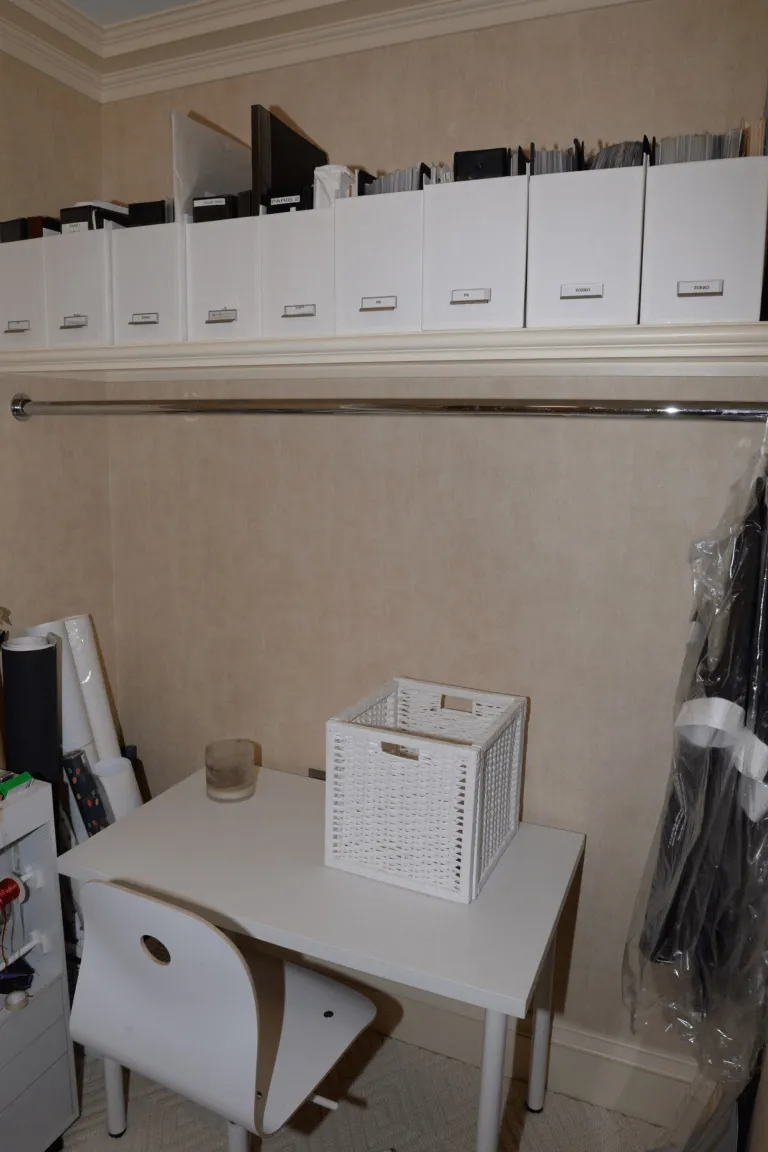
Photo: Federal Bureau of Investigation, Public domain, via Wikimedia Commons
Let's skip the part where someone tells you to scan everything and go paperless. You have receipts you'll need in April, notebooks you actually write in, mail that arrives whether or not you have a system, and a printer that produces things. Paper is part of your job. The goal isn't zero paper — it's zero undecided paper.
That's the whole thesis. Clutter isn't an amount; it's a backlog of decisions. So this reset is built around making decisions fast and then building a rhythm that keeps new paper from joining the pile.
Four weeks, roughly one hour each. Start this week and you'll be finished before Thanksgiving, with December to prove the system holds.
Why the Usual Advice Fails
Most desk-cleaning advice assumes a single big purge. One heroic Saturday, one trip to the shredder, one beautiful photo for the group chat. Six weeks later the desk looks the same, because a purge removes objects without installing a process. New paper keeps showing up at the same rate it always did, and there's still no designated place for it to land.
We're going to build the landing place first and empty the pile second. It feels backwards. It works better.
Week 1 (Nov 9–15): The Audit
Don't clean anything yet. Just look.
Take a photo of your desk as it is right now — you'll want it in three weeks. Then get a trash bag and a single empty copy-paper box, and walk your workspace counting what's actually there. Not reading it. Counting it.
Sort into rough species as you go:
- Mail and statements you haven't opened
- Receipts — the loose ones, the gas station ones, the ones in your coat pocket
- Notes on sticky pads, envelopes, the backs of envelopes
- Half-used notebooks with no label and no owner
- Printouts of things that also exist digitally
- Reference material you genuinely consult — vendor specs, contracts, tax docs
Write the totals on a sticky note and stick it to your monitor. Most people find that receipts and old printouts make up more than half the pile. That's the good news, because both are easy to move along.
While you're in there, note where paper accumulates. Is it the corner of the desk? The chair? The kitchen counter? That spot is the leak, and Week 3 is about plugging it.
Week 2 (Nov 16–22): Sort, Decide, Done
Now you touch every item once, with a timer on. Twenty-five minutes a day, four days, and you're through.
Use four destinations only:
- Recycle or shred. Anything you can't name a reason to keep. Financial documents get shredded, not tossed.
- Act today. Needs a signature, a payment, a call. These go in one folder labeled Today and nowhere else.
- File. Reference material you've actually used in the last year. If you haven't looked at it in twelve months and it's not tax-related, it goes in destination one.
- Archive. Things you must keep but won't touch — prior-year tax returns, closed contracts, warranty paperwork. This lives in a box, off the desk, labeled by year.
Notebooks: keep the active one, label it with a strip of masking tape and a Sharpie, and shelve the rest spine-out. Any notebook with fewer than ten filled pages gets combined into a single working notebook. Yes, really. You will not miss the other eleven.
Receipts: one manila envelope, kept in the same drawer, labeled with the year. Anything you might deduct goes in. When it's full, it gets sealed and archived.
Week 3 (Nov 23–29): Build the Rhythm
The pile is gone. Now install the landing zone so it doesn't come back.
Set up three physical touchpoints and nothing more:
- An inbox tray on the desk. Everything new lands here. Not the counter, not the chair, not the bag.
- A single action folder for things that need doing this week.
- A reference binder or file box with six to eight labeled tabs max. If you need more than eight, your categories are too fine.
Then pick your rhythm. One fifteen-minute pass on Monday to clear the tray, one on Friday to close the week. That's it. Thirty minutes a week total.
The rule that makes it stick: the tray is allowed to be full, but it's never allowed to overflow. If it's full on Wednesday, you clear it Wednesday. A tray with a boundary is a system. A tray without one is the desk you started with.
If the mail is your main source, open it standing up over the recycling bin. Junk goes in immediately, no sitting down, no stacking. This one habit eliminates most of the pile on its own.
Week 4 (Nov 30–Dec 6): Make It Survive December
December is the stress test — cards, packages, year-end statements, and a sudden flood of tax paperwork in January. Prep for it now.
- Label the archive box for 2026 and put it somewhere you'll actually reach, because you'll be adding to it in January.
- Set a recurring fifteen-minute calendar block for the Monday and Friday passes through the end of the year. Put it on the calendar, not on a sticky note.
- Refill the desk drawer with the boring stuff you always run out of — pens, a fresh pad, envelopes, tape. Half of paper chaos is just not having the right thing within reach when a document shows up.
- Pick one thing to stop keeping. For most people it's printed articles or meeting handouts that already exist in email. Decide once and you never have to decide again.
What Good Looks Like in January
By the first week of 2027, you should be able to answer three questions in under a minute: where is the receipt I need for taxes, where did I put the contract I signed in October, and what needs my attention right now.
That's the whole benchmark. Not a photo-ready desk — a desk where paper has a place to go and a rhythm that sends it there. The pile comes back when decisions stop. Keep making small ones every Monday and Friday, and it never gets big enough to need a four-week reset again.