The Invisible Handoff: How Paper Became the Secret Weapon of Hybrid Teams

Here's a scenario that will feel familiar to anyone managing a distributed team. A project moves through three people across two time zones over the course of a week. By the time it lands on the fourth person's plate, some of the context has evaporated. The original intent is buried in a chain of messages. The decision that shaped the direction is referenced but never explained. The new person has to reverse-engineer what happened just to figure out where to start.
This is the handoff problem. And it's costing hybrid teams more than they realize — not just in time, but in the quality of the work that gets passed along.
The surprising part? Some of the most effective solutions aren't digital at all.
Why Digital Tools Keep Dropping the Context Ball
It's not that Slack is bad or shared documents don't work. It's that these tools are optimized for speed and volume, not for the slow, careful transfer of why something happened the way it did.
Digital communication tends to compress context. A message gets sent, read, and acted on — but the reasoning behind it often doesn't make it into the thread. Shared documents capture decisions but rarely capture the conversation that led to them. By the time a project has moved through several hands asynchronously, the original thinking is scattered across a dozen different channels, and nobody has time to reconstruct it.
There's also what some team researchers call the "invisible handoff" — the moment when knowledge that lives in someone's head gets transferred to someone else without ever being fully articulated. In a physical office, this happens in the hallway, at the coffee machine, in the thirty seconds before a meeting starts. In a hybrid environment, those moments don't exist, and the knowledge often just doesn't transfer at all.
What Paper Does That Pixels Don't
Physical paper artifacts — annotated documents, printed agendas, shared notebooks — do something that digital tools struggle with: they force the person creating them to slow down and make their thinking visible.
When you annotate a printed document, you're not just flagging something — you're leaving a trace of how you read it. Your margin notes, your underlines, your question marks and exclamation points create a map of your reasoning that the next person can actually follow. That's qualitatively different from a comment left in a Google Doc, which tends to be more formal, more polished, and less revealing of the actual thought process.
Printed agendas work similarly. A meeting agenda that gets printed and annotated during the meeting becomes a record that's richer than any digital transcript. The notes in the margins, the items that got crossed out, the arrows connecting two points — these tell a story that a clean digital summary can't capture.
Real Workflows Where This Is Actually Happening
A few patterns have emerged among hybrid teams that are intentionally using paper as part of their collaboration toolkit.
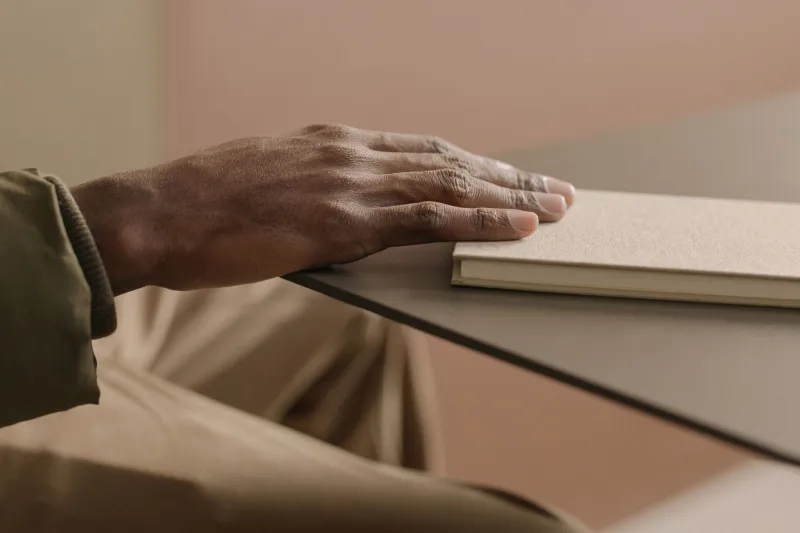
The traveling notebook. Some project teams keep a physical notebook that moves between team members along with a project. Each person adds their notes, questions, and observations before passing it along. The result is a running record of how the project evolved — not just the decisions, but the hesitations, the pivots, the things that almost happened. Teams that use this approach report that onboarding new members to an ongoing project becomes significantly easier because the history is tangible and readable.
Printed briefs with handwritten annotations. Rather than circulating a brief digitally and collecting feedback through comments, some teams print the brief and have each reviewer annotate it by hand before scanning and sharing. The handwritten notes tend to be more candid and more specific than typed comments — partly because handwriting is slower and forces more deliberate thought, and partly because there's something about the physical act of marking up a document that feels less performative.
The weekly paper standup. A handful of distributed teams have replaced their digital standup tools with a simple practice: each team member writes their update by hand on a half-sheet of paper and either scans it or photographs it to share. The constraint of a physical page limits the length. The handwriting makes it feel personal. And the act of writing it by hand seems to surface things that people wouldn't bother typing — small observations, soft concerns, ideas that aren't fully formed yet.
The Asynchronous Advantage
One of the underrated benefits of paper artifacts in a hybrid workflow is that they're inherently asynchronous in a different way than digital tools. A shared document can be edited by multiple people simultaneously, which sounds like a feature but often means that the document's history gets overwritten. A physical notebook can only be in one place at a time, which forces a kind of sequential engagement that actually mirrors how knowledge should transfer.
There's also a permanence to paper that digital tools don't have by default. A notebook page doesn't get accidentally deleted. It doesn't disappear when someone's account gets deactivated. It doesn't require a login or a specific app to read. In an era when teams are constantly migrating between platforms, the durability of a physical record is genuinely undervalued.
Making It Work Without Making It Complicated
The teams that do this well aren't trying to replace their digital infrastructure — they're supplementing it at the specific moments where digital tools fall short. The key is identifying those moments deliberately rather than defaulting to paper for everything or dismissing it entirely.
A few practical starting points:
-
Identify your highest-stakes handoffs. Where does context most often get lost in your team's workflow? Those are the moments where a physical artifact — a printed summary, an annotated brief, a shared notebook — is most likely to add value.
-
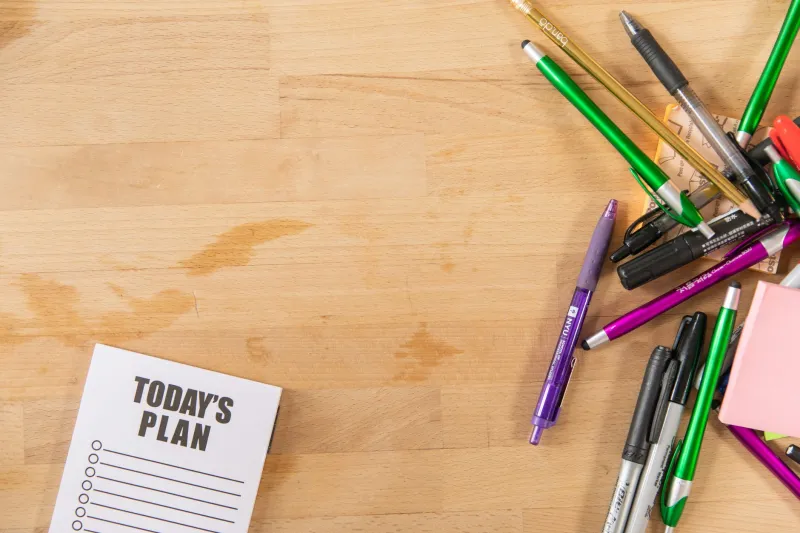
Make it easy to go analog. Stock your remote team members with quality notebooks and good pens. This sounds trivial, but people are significantly more likely to use paper tools that feel good to write on. A cheap spiral notebook from a drugstore doesn't invite the same engagement as a well-made notebook with decent paper.
-
Don't over-engineer the system. The value of paper in a hybrid workflow is its simplicity. The moment you create a twelve-step process for how the traveling notebook gets passed and documented, you've lost the thing that made it work.
The Counterintuitive Truth
In a workplace culture that tends to treat analog tools as relics, there's something almost rebellious about reaching for a notebook when everyone else is opening another app. But the hybrid teams finding the most success with paper aren't being nostalgic — they're being practical.
Context is hard to transfer. Nuance gets lost in translation. And sometimes the most sophisticated solution to a communication problem is a good pen and a blank page.