Open That Drawer: What Your Stationery Stash Is Secretly Telling You About How You Actually Work
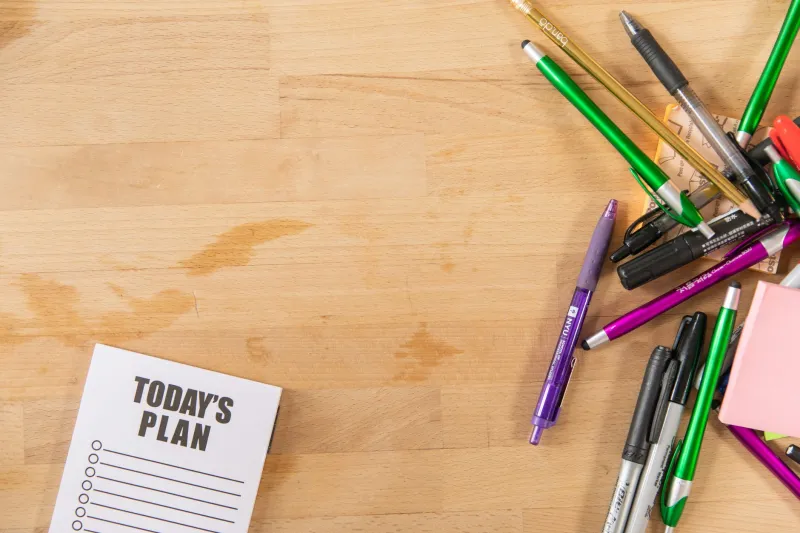
Let's be honest. There's a drawer — maybe two — that you haven't fully opened in a while. Not because you forgot about it, but because somewhere in the back of your mind, you know what's in there. A graveyard of good intentions. Sticky note pads in four colors. A spiral notebook with eleven pages used. Pens that may or may not work. A highlighter set you bought during a particularly optimistic Monday.
Here's the thing: that drawer isn't a problem to be solved. It's a profile. And if you're willing to actually audit it — really look at what you've accumulated and why — you'll learn more about your real work style in twenty minutes than any personality quiz or time-tracking app has ever told you.
The Psychology Behind Paper Hoarding
Accumulating stationery isn't random. Behavioral researchers have long noted that the objects people surround themselves with at work reflect their cognitive habits, emotional needs, and even their relationship with uncertainty. Paper products, specifically, tend to attract a particular kind of professional: someone who values optionality.
When you buy a new notebook before finishing the old one, you're not being wasteful. You're hedging. That fresh notebook represents a clean slate — a version of your workflow that hasn't failed you yet. The same logic applies to the stack of legal pads, the index cards you bought to try a new system, the planner from January that got abandoned by March.
Each of those items is a snapshot of who you were trying to be at a specific moment. And taken together, they tell a story about the gap between your aspirational work style and your actual one.
What Different Hoarding Patterns Actually Reveal
The Multi-Notebook Collector If your drawer holds four or more notebooks in various states of use — some with just a few pages filled, others dedicated to single projects — you're likely a parallel processor. You don't think in one clean linear stream; your brain juggles multiple contexts simultaneously. The instinct to reach for a fresh notebook when starting something new isn't disorganization. It's compartmentalization. The real question isn't whether to stop buying notebooks. It's whether the system you've built around them is actually retrievable. If you can't find what you wrote three weeks ago, that's the problem — not the number of notebooks.
The Sticky Note Wallpaper Crowd A desk buried in sticky notes — on the monitor, the lamp, the edge of the keyboard — signals a mind that processes information in short bursts and needs external memory support. This isn't a flaw. It's a working memory style. The issue arises when the notes stop being reminders and start being anxiety. If you've got sticky notes underneath other sticky notes, it might be time to introduce a capture system that actually gets reviewed, not just accumulated.
The Unopened Supply Hoarder Still-in-the-package highlighters, shrink-wrapped notepads, pens you haven't tested — this pattern often points to a fear-of-commitment work style. There's comfort in potential. Once you open something and start using it, it can disappoint you. Keeping supplies pristine keeps the possibility alive. If this sounds familiar, the fix isn't minimalism. It's permission. Open the good pen. Use the nice notebook. The act of actually engaging with your tools tends to break the paralysis.
The Single-System Loyalist On the opposite end, some drawers are almost aggressively sparse: one notebook, two pens, a single notepad. This person has usually found something that works and committed hard. The risk here isn't clutter — it's rigidity. When the system breaks down (and it will), there's no backup, no flexibility. A little redundancy in your stationery setup isn't weakness. It's resilience.
Your Drawer as a Diagnostic Tool
Rather than approaching a desk audit as a decluttering project, try treating it like a workflow consultation. Pull everything out. Lay it on a flat surface. Then ask yourself three questions for each item:
-
When did I last use this, and what was I working on? This tells you which tools actually show up in your real workflow versus which ones live in your aspirational one.
-
Why did I buy it in the first place? The answer usually reveals something about a problem you were trying to solve. Did you solve it? Did the tool help?
-
Would I reach for this tomorrow if I needed it? If the honest answer is no, that item isn't serving you — it's just occupying space and mental bandwidth.
What you're building isn't a minimalist showcase. You're building a functional stationery ecosystem: a curated set of tools that reflects how your brain actually works, not how you wish it did.
Curating for Reality, Not Aspiration
The productivity industry has done a number on all of us. We're conditioned to believe that the right system — the right app, the right planner, the right setup — will finally unlock the organized, efficient version of ourselves. But that version doesn't exist. What exists is you, with your actual cognitive style, your actual workflow quirks, and your actual relationship with paper.
Curating a stationery setup that works means being honest about a few things. If you've tried bullet journaling three times and abandoned it every time, you're probably not a bullet journaler — and that's fine. If you always end up writing on whatever scrap of paper is nearest, maybe a structured planner isn't your thing and a simple legal pad is. If you genuinely think better when you have color-coded systems, then the five-highlighter set isn't excessive. It's essential.
The goal isn't to own less. The goal is to own intentionally.
The Stuff Worth Keeping
Once you've done the audit, you'll probably find a smaller core of supplies that you actually reach for consistently. Those are your anchors. Everything else falls into two categories: things worth trying deliberately (give them a real two-week test before deciding) and things that were always more about the idea than the practice.
Donate what you won't use. A lot of schools, community centers, and nonprofits across the US are genuinely grateful for office supply donations — and clearing that mental weight from your workspace has real cognitive benefits.
For what stays, think about accessibility. The tools you use daily should live on your desk or in the top drawer. The stuff you reach for weekly goes deeper. The occasional-use items can live further back — but they should still have a place, not just a pile.
Your Drawer, Your Data
Productivity culture loves a clean desk photo. But the real insight isn't in the after shot — it's in the before. The drawer you've been avoiding is full of information about how your brain works, what problems you've been trying to solve, and which tools have actually earned a place in your daily life.
Audit it with curiosity instead of judgment, and you might find that the stationery you've been hoarding isn't a sign of chaos. It's evidence of a working professional who keeps trying to find better ways to think. That's not a problem. That's actually a pretty good starting point.