Born Digital, Choosing Paper: How Gen Z Is Rewriting the Rules of Getting Things Done
The Generation That Should Love Apps Doesn't Trust Them Anymore
Here's something nobody saw coming: the most digitally fluent generation in history is buying planners. Like, physical ones. With paper pages and pens and everything.
Gen Z — loosely defined as people born between 1997 and 2012 — grew up with smartphones in their pockets and tablets in their classrooms. They've never known a world without Wi-Fi. And yet, if you scroll through TikTok or Pinterest right now (ironically, on your phone), you'll find thousands of Gen Z creators showing off their handwritten weekly spreads, their ink-stained fingers, their carefully curated stationery hauls. The hashtag #plannersetup has hundreds of millions of views. Paper isn't dying for this crowd. It's having a full-on renaissance.
So what's actually going on here? And what does it mean for how we think about productivity in 2025?
Notification Fatigue Is Real, and Gen Z Feels It Hard
Talk to any Gen Z professional — say, a 24-year-old marketing coordinator in Austin or a junior graphic designer in Brooklyn — and you'll hear a version of the same story. Apps were supposed to make life easier, but somewhere along the way, the tools meant to help them focus became the biggest source of distraction.
Calendar apps ping. Task managers send reminders. Note-taking platforms sync across devices, which sounds great until you're spending ten minutes figuring out which version of your notes is the most current. Every productivity app comes with its own learning curve, its own subscription fee, and its own way of quietly demanding your attention.
Paper doesn't do any of that. A planner just sits there, open to today's date, waiting. There's no algorithm deciding what you should look at first. There's no badge count in the corner making you feel behind before you've even started.
For a generation that grew up with constant digital stimulation, that silence is genuinely radical.
The Psychology Behind the Pen
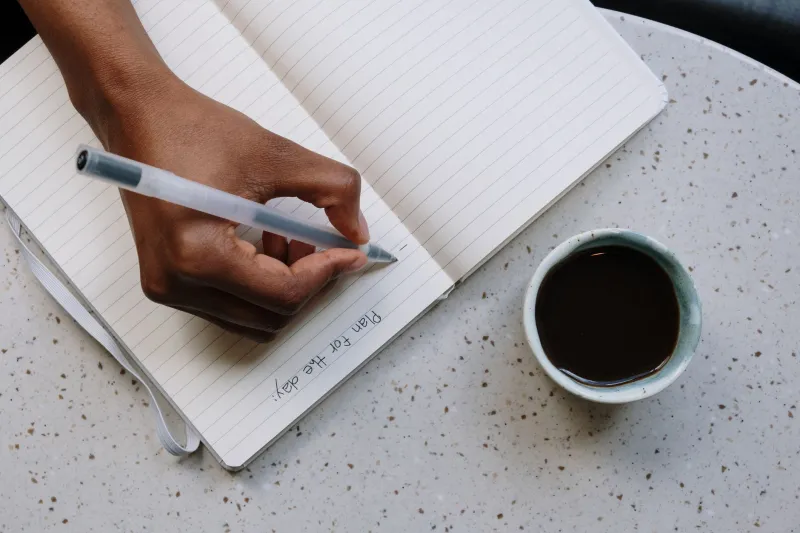
There's more happening here than just vibe, though. The cognitive case for handwriting is actually pretty solid. Research consistently shows that writing by hand engages the brain differently than typing — it slows you down just enough to process information more deeply, which means better retention and clearer thinking.
When you write out your goals for the week by hand, you're not just recording information. You're making decisions about what matters. You're filtering. That friction — the slight inconvenience of putting pen to paper — turns out to be a feature, not a bug.
Gen Z, perhaps more than any previous generation, has developed a sophisticated awareness of how their environments affect their mental state. They talk openly about anxiety, burnout, and the psychological cost of always being online. Choosing a paper planner, for many of them, is less about being anti-tech and more about being intentional. It's a boundary. A ritual. A daily act of saying: this hour belongs to me, not to my notifications.
What They're Actually Buying (And Why It Matters)
This isn't a one-size-fits-all trend. Gen Z's stationery preferences are pretty specific, and they're worth paying attention to if you're in the business of supplying them.
Dotted and grid-ruled notebooks dominate. The flexibility appeals to people who want structure without rigidity — they can sketch, list, map, or write in whatever format works for them that day. Brands that offer high-quality paper with minimal bleed-through are winning loyalty fast, because this crowd uses fountain pens, brush pens, and fine-liners that punish cheap paper immediately.
Planner formats have also shifted. The old-school academic planner with its tiny boxes and generic layout isn't cutting it. Gen Z gravitates toward undated planners (so they're not locked into a start date and don't feel guilty skipping a week) and systems that leave room for reflection — weekly review sections, habit trackers, space for notes that aren't task-related.
And aesthetics matter enormously. This is a generation raised on visual platforms. They want stationery that looks good on camera and feels good in hand. Muted tones, quality covers, thoughtful design — these aren't luxuries for them. They're part of what makes the habit stick.
The Hybrid Workflow That's Actually Working
It's important to note that Gen Z isn't abandoning technology entirely. That would be both impractical and kind of beside the point. What they're building instead is a hybrid workflow — one where paper and digital each play to their strengths.
A common setup looks something like this: long-term projects and shared team tasks live in digital tools like Notion or Asana, because collaboration requires it. But daily planning, brainstorming, personal goals, and anything that requires real thinking? That goes on paper. The digital world handles logistics. The paper world handles cognition.
This split isn't arbitrary. It reflects a pretty clear-eyed understanding of what each medium does well. Screens are great for storing and sharing information. Paper is great for generating and processing it.
Businesses that recognize this are already adapting. Companies supplying remote and hybrid workers are starting to include quality notebooks and planners in their onboarding kits alongside the laptop and the software subscriptions. It signals something — that the company understands how people actually work, not just how they're supposed to work according to the latest productivity app.
What Businesses Can Take Away From All This
If you're running a team with Gen Z members — or you're trying to attract them as customers — the paper resurgence has some practical implications.
First, don't assume digital-first means digital-only. Offering paper-based planning tools as part of your workplace culture isn't regressive. For a growing slice of your workforce, it's genuinely supportive.
Second, quality signals respect. Gen Z has a finely tuned radar for cheap and performative. If you're going to offer branded notebooks or company planners, make them worth using. A well-made notebook that someone actually writes in every day is brand exposure that no app notification can replicate.
Third, understand that this trend is about autonomy as much as it's about paper. Gen Z wants to feel like they're in control of their attention — not managed by it. Workplaces and brands that support that instinct, rather than fighting it, are going to earn serious loyalty.
The Paradox That Makes Perfect Sense
On the surface, it seems contradictory: the generation that lives online is choosing to plan offline. But spend five minutes with any Gen Z professional who's made the switch, and the contradiction dissolves pretty quickly. They're not rejecting technology. They're just refusing to let it be the answer to everything.
Paper, for them, is a tool with a very specific and valuable job: it helps them think. And in a world that's constantly competing for their focus, having one corner of their life that's quiet, tactile, and entirely their own turns out to be worth a lot.
At PaperKart, we've been watching this shift with a lot of interest — and honestly, a lot of excitement. Because if there's one thing we've always believed, it's that the right paper tools don't just help you get things done. They help you figure out what's worth doing in the first place. Turns out Gen Z figured that out too.