Scribble in the Margins: Why Smart Professionals Are Reading on Paper Again
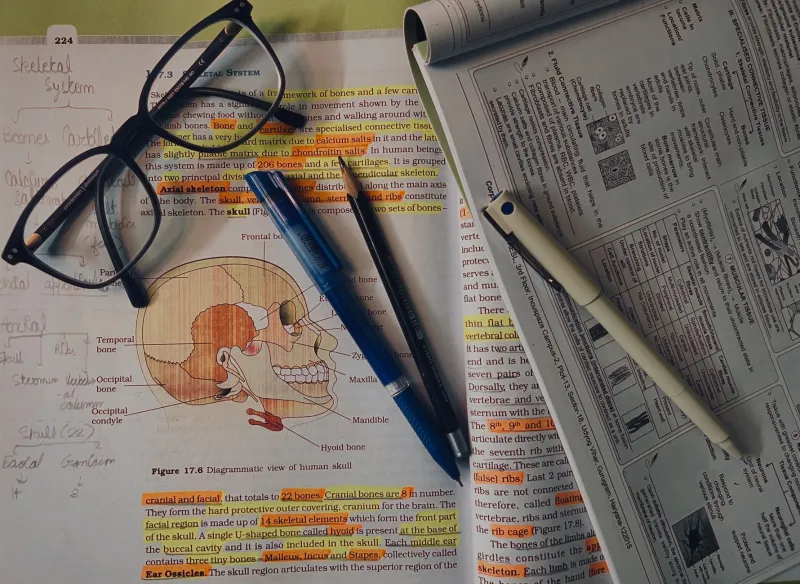
Somewhere between your fourteenth browser tab and your third podcast episode of the morning, something got lost. Not your keys. Not your coffee. Your actual ability to think about what you're consuming.
A growing number of professionals — lawyers, designers, entrepreneurs, consultants — are noticing it too. And they're doing something about it that looks almost quaint from the outside: they're reading on paper again. Not just reading, though. They're writing all over it.
Welcome to the margin notes revolution.
The Problem With Reading That Doesn't Leave a Mark
Digital reading is frictionless by design. You highlight something in your Kindle app, maybe share it to your notes software, and move on. It feels productive. But research keeps suggesting it isn't, at least not in the way we assume.
Studies out of universities like Princeton and UCLA have found that processing information by hand — writing it, responding to it, physically engaging with it — leads to deeper comprehension and longer retention than passive digital consumption. When you underline a sentence in a real book, your brain isn't just filing it. It's wrestling with it.
That wrestling? That's where the thinking happens.
For knowledge workers whose competitive edge is literally how well they think, this distinction matters enormously. Scrolling through a PDF and skimming a well-argued paperback are not the same cognitive activity, even if the words on the page are identical.
Why Annotation Is Having a Moment
Marking up books used to be something you did in school because your professor told you to. Now it's something people are choosing deliberately, almost defiantly, as a way of slowing down in a media environment engineered to speed them up.
Call it a counterculture move if you want. In a world optimized for passive consumption — infinite scroll, autoplay, algorithmic feeds — the act of picking up a physical book, uncapping a pen, and arguing with the author in the margins is genuinely countercultural. It's saying: I'm not just absorbing this. I'm responding to it.
Entrepreneurs especially seem to be gravitating toward annotated reading as a way of extracting more from less. Instead of racing through twenty business books a year and retaining fragments of each, they're reading six or eight carefully and actually using what they learn. The margin note becomes a record of their own thinking — a conversation between the author's ideas and their own experience.
The Paper Quality Conversation Nobody Is Having
Here's something that doesn't come up enough: not all paper is created equal for annotation.
If you've ever tried writing in the margins of a cheap paperback, you know the frustration. Thin, slightly translucent pages that bleed through when you use anything other than a pencil. Pages that feel almost apologetically flimsy under your pen. It's hard to commit to annotating when the paper itself seems reluctant to be written on.
Heavier, quality paper stock changes the experience completely. A book printed on 60lb or 70lb paper, or a journal with pages that hold ink cleanly without feathering, invites engagement. There's a tactile confidence to writing on good paper that thin stock simply can't replicate. Your notes feel permanent. Considered. Worth making.
This is part of why so many professionals who've gotten serious about annotated reading have also gotten more deliberate about the notebooks and journals they use alongside their books. A quality reading journal — where you copy out key quotes, respond to arguments, sketch out how an idea connects to a project you're working on — becomes something you'll actually return to. A cheap spiral notebook with paper that smears? Probably not.
The right paper isn't a luxury consideration here. It's a functional one.
Building an Annotation Practice That Sticks
If you want to try this without it feeling like homework, keep the system simple.
Start with a single symbol system. You don't need elaborate color coding. Some people use a straight underline for important ideas, a wavy underline for things they want to think more about, and a star in the margin for anything they want to act on. Three marks. That's it. The point is to engage, not to perform engagement.
Keep a dedicated reading notebook nearby. When a margin gets too crowded, or when an idea needs more space than a few inches of white space can offer, move to your notebook. Date the entry, note the book and page number, and let yourself write freely. Some of the most useful thinking happens in this overflow space.
Don't annotate everything. Seriously. If you're underlining every paragraph, you're not prioritizing — you're just highlighting. The discipline of choosing what actually deserves a mark is part of what sharpens your reading.
Revisit your annotations. This is the step most people skip, and it's the one that actually converts reading into applied knowledge. Flip back through a book after you finish it. Your margin notes are a map of what your brain found worth stopping for.
It's Not About Going Analog for Its Own Sake
Let's be clear: this isn't a screed against digital tools. Most professionals who've embraced margin-note reading still use laptops, still have digital calendars, still read articles online. This isn't a purity test.
It's about recognizing that not all reading serves the same purpose. Skimming industry news on your phone is one thing. Deeply engaging with a book that might shift how you run your business or approach your craft is another. Treating those two activities identically — both on screens, both passive — undersells the second one.
Paper reading with a pen in hand is a mode shift. It signals to your brain: this one matters, pay attention.
The Margin as a Record of Who You Were
There's something else worth mentioning, something that doesn't fit neatly into a productivity argument but feels true anyway.
Annotated books are personal artifacts. Open a book you marked up five years ago and you'll find a version of yourself — what you noticed, what you questioned, what you were worried about or excited by at the time. That's not nothing. In a world where so much of our thinking happens in apps that get updated, migrated, or deleted, there's something genuinely valuable about a record that lives on paper.
The margin note revolution isn't just about reading better. It's about thinking more deliberately, engaging more honestly with ideas, and leaving a trace of your own mind in the work that shaped it.
A good pen. Quality paper. A book worth arguing with. That's a pretty solid setup for doing some of your best thinking.