That Beautiful Planner Is Judging You (And You're Still Not Getting Things Done)
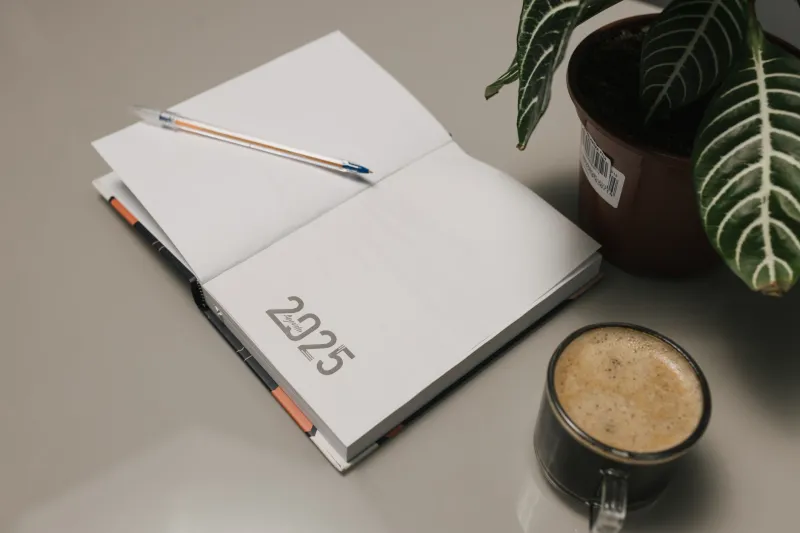
Let's be honest for a second. Somewhere in your house—maybe on your desk, maybe shoved in a drawer—there's a planner that didn't make it past February. It's beautiful. The cover is satisfying to touch. The paper is thick enough that your pen doesn't bleed through. And it is absolutely, completely empty.
You're not alone. Americans spend roughly $350 million a year on planners and organizational tools, and productivity researchers estimate that the majority of those purchases get abandoned within the first six weeks. That's not a paper problem. That's a behavior problem. And no amount of gold foil stamping is going to fix it.
So before you click "add to cart" on another premium planning system, let's talk about what's actually going on—and what it would take to make any planner actually work for you.
The Planner Purchase High Is Real (And It's Temporary)
There's a well-documented psychological phenomenon sometimes called "false hope syndrome," where the act of buying a tool designed to improve your life temporarily makes you feel like you've already improved your life. You buy the planner. You feel organized. You feel like a person who has their stuff together. And then Monday comes, and the feeling evaporates.
This isn't a character flaw—it's just how brains work. The anticipation of change triggers a dopamine response similar to the change itself. The problem is that dopamine doesn't come with instructions. It doesn't tell your brain how to build a new habit; it just rewards you for the intention.
The fix isn't to stop buying planners. It's to understand that the planner is an input, not an outcome. You still have to do the work of designing a system around it.
Your Planning Style Might Not Match Your Planner's DNA
Here's something most planner marketing won't tell you: planning tools are designed around specific cognitive styles, and if yours doesn't match, you're going to struggle—no matter how premium the product is.
Broadly speaking, planners fall into a few camps:
- Time-block formats (hourly breakdowns, scheduled slots) work well for people who think in terms of appointments and deadlines. If your day is largely self-directed, a rigid hourly layout can feel suffocating.
- Task-list formats (to-do columns, priority rankings) appeal to people who are motivated by completion. But if you have trouble estimating how long things take, a list without time context can leave you perpetually behind.
- Free-form or dot-grid layouts give you maximum flexibility, which sounds great until you realize flexibility requires you to show up with a system already in your head.
- Habit trackers and goal-oriented layouts are fantastic for people who are motivated by streaks and progress—and actively demoralizing for people who miss a day and spiral.
Before you buy your next planner, spend a week writing down how you naturally organize your thoughts when you're trying to get something done. Do you make lists? Do you think in time chunks? Do you sketch out rough maps of your week? That natural tendency is your cognitive style, and it should be the first filter you apply when choosing a paper planning tool.
The Setup Trap: When Decorating Becomes Procrastination
There's a whole corner of the internet dedicated to "planner setups"—elaborate, color-coded, sticker-adorned spreads that look incredible on Instagram and take about ninety minutes to create every Sunday. If that ritual genuinely energizes you and feeds into actual productivity during the week, great. Keep doing it.
But for a lot of people, the setup is the productivity. The act of creating a beautiful weekly spread substitutes for the harder cognitive work of actually planning—deciding what matters, what to cut, what to push forward. It feels productive without being productive.
The test is simple: look back at three weeks of your most elaborate setups. Did the things you wrote down actually get done? If the answer is mostly no, your planner might be functioning more as a creative outlet than an organizational tool. Which is fine! But name it for what it is, and maybe invest in a sketchbook instead.
What Productivity Experts Actually Do
When you talk to people who are genuinely, sustainably productive—not the hustle-culture variety, but the kind who consistently finish what they start without burning out—a few patterns emerge.
First, they keep their systems small. Rather than elaborate multi-page spreads, they tend to use a single daily page or even a folded index card. The constraint forces prioritization. When you only have space for five things, you have to decide which five things actually matter.
Second, they do a brief daily review. Not a two-hour Sunday planning marathon—just five to ten minutes each morning to look at the day ahead and ask: what are the one or two things that would make today a success? Everything else is secondary.
Third, they don't restart from zero after a bad week. One of the most common planner-killing behaviors is the "fresh start" impulse—abandoning a system entirely because you fell off for a few days. Productive people treat inconsistency as data, not failure. They note what got in the way and adjust.
Choosing a Planner That's Actually Built for You
Okay, so you want to try again. Here's a practical framework for making a smarter choice this time.
Step 1: Decide on your planning horizon. Do you think mostly in days, weeks, or months? If you're project-driven, a monthly overview might be enough. If your schedule changes daily, you need granular daily pages.
Step 2: Match the format to your cognitive style (see above). Don't buy a time-block planner because it looks sophisticated if you've never successfully used one before.
Step 3: Start with less. If you've failed with complex systems, try something simpler—even a plain notebook with a consistent daily format you write yourself. You can always scale up.
Step 4: Give it a real trial period. Commit to using any new system for at least 30 days before evaluating it. Habits take time to form, and early friction doesn't mean the system is wrong.
Step 5: Separate aesthetics from function. It's completely reasonable to want a planner that looks good—you're more likely to use something you enjoy picking up. Just make sure beauty is a bonus, not the primary reason you're buying.
The Right Planner Is the One You'll Actually Open
At PaperKart, we genuinely love premium paper products. We think the weight of good paper and the feel of a quality cover make a real difference in how you engage with your planning practice. But we'd be doing you a disservice if we pretended that a better product automatically creates better behavior.
The planner you'll use is better than the planner you'll admire from across the room. Sometimes that's a $5 spiral notebook. Sometimes it's a beautifully crafted system with monthly tabs and lay-flat binding. The point isn't the price—it's the fit.
Figure out how your brain works first. Then find the paper that meets it there.