Heavy Paper, Lasting Impressions: The Small Business Marketing Trick Hiding in Your Invoice
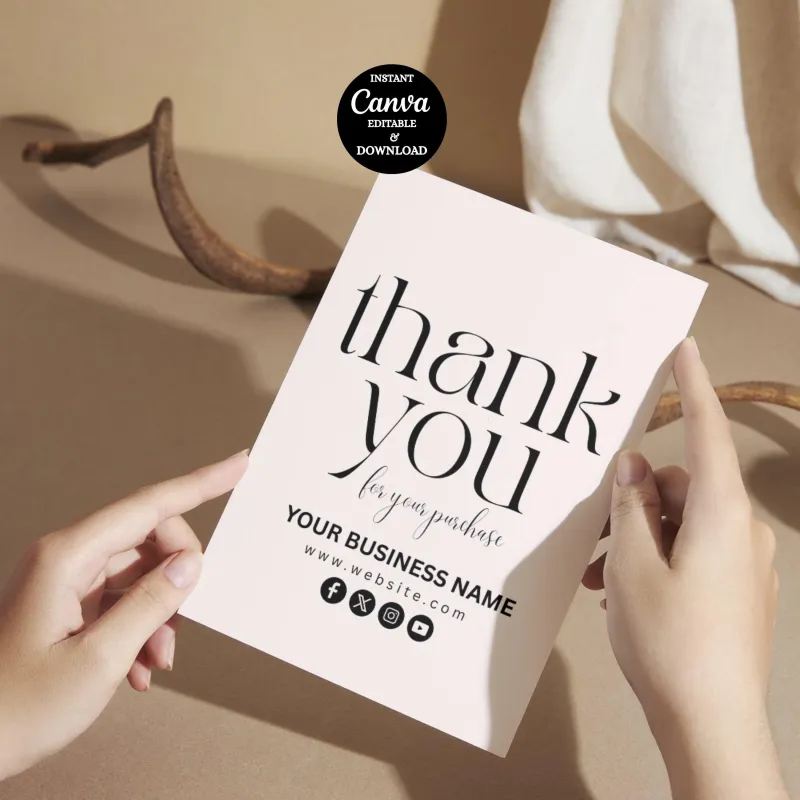
Photo: small business branded cardstock invoice and thank you card on wooden counter, via i.etsystatic.com
Here's an uncomfortable math problem for the email-obsessed: your carefully crafted newsletter has a lifespan measured in seconds, and the average open — if it happens at all — leaves no residue. Meanwhile, a thick cardstock invoice or a hand-signed thank-you card can sit on a customer's kitchen counter for weeks, getting picked up, shown to a spouse, remembered.
Per impression, paper is arguably the cheapest brand marketing a small business can buy. And a growing number of independent businesses are figuring this out.
The Bakery That Turned Receipts Into a Ritual
Take a small bakery in Portland, Oregon — the kind of place competing against chains with a fraction of the ad budget. Instead of the curling thermal slip everyone else hands over, the owner prints orders on heavyweight cards with the bakery's mark, the baker's first name, and a line inviting the customer back with a small stamp-based loyalty punch.
Customers keep them. Some pin them to fridges. The owner estimates the whole program costs less per month than a single day of paid social ads — and unlike an ad, the receipt physically comes home with the customer.
The Contractor Who Sends the Folder
A remodeling outfit in North Carolina does something even simpler: every project closes with a branded folder containing the warranty, care instructions, and a handwritten note from the crew. Total cost, maybe eight dollars a job.
But here's what happens: when the neighbor asks "who did your kitchen?" — the single most valuable referral moment in home services — the homeowner doesn't describe the contractor. They hand them the folder. The folder does the selling. The owner credits it with a measurable chunk of referral work, and admits the company's entire digital presence couldn't buy that kind of credibility.
Why Paper Sticks When Pixels Slide
A few things are working here, and none of them are nostalgia:
Weight signals value. Study after study in haptics research suggests people associate heavier, textured objects with quality and importance. A 120lb cardstock invoice says "established" before a word is read.
Paper has no inbox. It doesn't compete with 47 unread messages. It competes with whatever's on the counter, and usually wins.
Handwriting is proof of effort. A printed email says "automation." A signed card says "a person thought about you specifically." Customers can tell the difference, and they tell their friends about it.
Physical items are portable ads. The branded folder gets carried into a neighbor's house. The nice receipt gets shown at dinner. Email can't travel like that.
The Playbook, If You Want to Steal It
You don't need a print shop on retainer. Start with the highest-frequency paper touchpoint you already have:
- Upgrade the invoice or receipt. Heavier stock, your logo, a human's name at the bottom. This is your most-repeated brand impression — treat it like one.
- Add one handwritten element. Ten seconds with a pen on a thank-you card after a sale. Non-negotiable, weirdly powerful.
- Make something keepable. A care card, a stamp card, a folder for documents. If it's useful or beautiful, it stays in the customer's world instead of the trash.
- Keep it consistent. Same stock, same mark, same tone across every touchpoint. Consistency is what turns paper goods into a brand instead of a gimmick.
The pitch to your accountant is easy: this is marketing that costs pocket change per customer and compounds with every referral conversation. In a market where every small business is fighting for the same three seconds of email attention, the company that shows up as something you can hold has already won the first round.