15 Minutes, a Pen, and a Page: The Daily Writing Habit Behind Some of the Sharpest Minds in Business
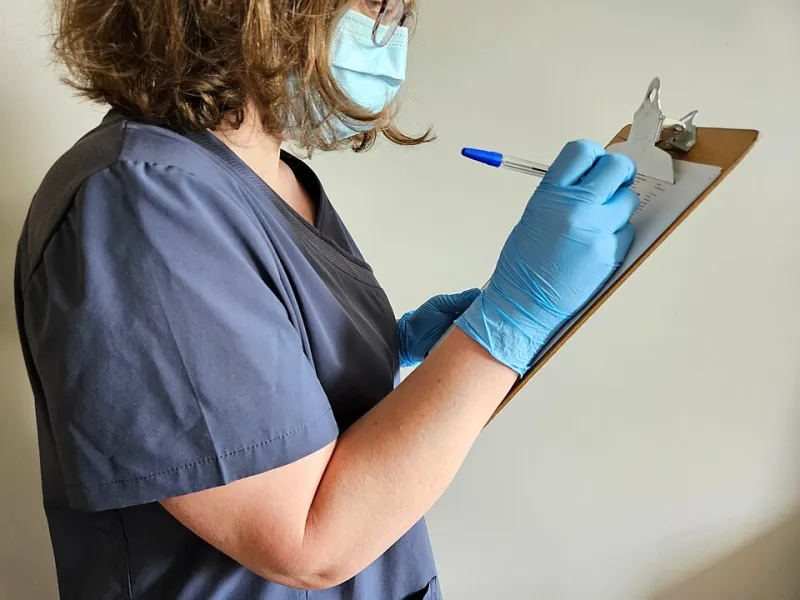
Photo: MelConfidentiel, CC BY 4.0, via Wikimedia Commons
Dr. Priya Nair starts every morning the same way. Before her laptop opens, before her phone leaves the nightstand, she sits at her kitchen table in Cambridge, Massachusetts, and writes for 15 minutes in a wide-ruled composition notebook. She's a materials scientist at a biotech firm. She also swears this low-tech habit is the reason she hasn't missed a major deadline in four years.
"I don't journal in the feelings sense," she's quick to clarify. "I write about problems. What's stuck. What I'm trying to figure out. It's less diary, more... debugging."
Nair is part of a growing cohort of high-achieving professionals who have deliberately carved out time for handwriting in a world that's aggressively digital. They're not doing it out of nostalgia. They're doing it because it works—and the neuroscience is starting to explain why.
The Brain on Handwriting
Research out of the Norwegian University of Science and Technology published in 2023 found that handwriting activates significantly more regions of the brain than typing does. The fine motor movements required to form letters engage neural pathways associated with memory encoding, language processing, and conceptual thinking—in ways that tapping a keyboard simply doesn't replicate.
Dr. Audrey Lim, a cognitive neuroscientist based in San Francisco who consults with executive teams on cognitive performance, puts it plainly: "When you write by hand, your brain is doing more work. That's not a bug—it's the feature."
The slower pace of handwriting forces a kind of real-time synthesis. You can't transcribe everything, so you summarize, prioritize, and reframe as you go. That compression process, Lim argues, is where a lot of the cognitive value lives.
What They're Actually Writing
Ask a dozen high performers what their handwriting practice looks like, and you'll get a dozen different answers. But a few patterns emerge.
Morning pages. The concept, popularized by Julia Cameron in The Artist's Way, involves writing three longhand pages first thing in the morning—stream of consciousness, no editing. Marcus Webb, a Dallas-based entrepreneur who runs a regional logistics company, has been doing this for six years. "It's not pretty writing. It's not even coherent half the time," he says. "But it clears out the noise. I get to my desk with a quieter head."
Decision trees. New York attorney Simone Garrett uses her morning writing time to map out complex decisions on paper before bringing them to clients or colleagues. "I draw branches. I write out the worst-case scenario for each path. I do it by hand because I think differently when I'm not typing," she says. "There's something about the physical act that makes me more honest with myself."
Margin annotation. Product designer Theo Albright in Portland reads every significant article or report he encounters in print—specifically so he can write in the margins. "I've got notebooks full of margin responses to things I've read," he says. "It's how I process. Highlighting on a screen does nothing for me. Writing a two-word reaction in the margin—that sticks."
Nightly capture. Some practitioners flip the ritual to the end of the day. Dr. Nair does her morning problem-solving writing, but she also keeps a separate index card system on her desk where she writes down every unresolved question before she leaves the lab. "It externalizes the mental load," she says. "I'm not lying awake at night because I wrote it down. It exists somewhere outside my head."
The Unexpected Business Benefits
The practitioners we spoke with weren't just reporting vague improvements in focus or wellbeing—they pointed to specific, concrete outcomes.
Webb credits his morning pages with helping him catch a vendor relationship issue before it became a contract dispute. "I wrote about this nagging feeling I had about a particular partner. Writing it out, I realized I couldn't actually articulate what they'd agreed to do versus what they were doing. That gap—I found it on paper."
Garrett says her decision-tree habit has made her a better negotiator. "I walk into mediations having already mapped out where the other side is likely to go. I've done it on paper, so it's in my head. I don't need to look at notes."
Albright points to a product pivot his team made 18 months ago that he attributes partly to a margin note he scrawled on a printed user research report. "I wrote 'wrong question' next to a whole section of findings. That two-word note started a conversation that changed the direction of the product."
The Tools They Use (and Why They're Specific About Them)
One thing that surprised us in these conversations: how particular people are about their paper and pens.
Nair uses the same brand of composition notebook she's used since graduate school and a fine-point rollerball pen. "If the pen skips, I lose my train of thought. It sounds precious, but it's real," she says.
Webb writes in a hardcover dotted notebook—the dots give him structure without the rigidity of lines. Garrett uses a legal pad, because she's a lawyer and, as she puts it, "the format is already in my muscle memory."
Albright keeps a mix: a sketchbook for visual thinking, a pocket notebook for capture, and a separate reading journal for his margin-note transcriptions.
The specificity matters. These aren't people who grab whatever's nearby. They've found tools that work for their particular style of thinking and they stick with them—because consistency in the ritual amplifies the cognitive benefit of the habit itself.
Starting Your Own Practice
You don't need to commit to an elaborate system. The practitioners we interviewed all started with something simple: a notebook, a pen they liked, and a consistent time.
The advice they give is consistent: start with five minutes before you scale to fifteen. Write about something real—a problem you're working on, a decision you're avoiding, a meeting you're dreading. Don't edit. Don't perform. Just write.
The paper will do more than you expect.
PaperKart carries a curated range of notebooks, writing pads, and pens suited for daily writing practices—from composition notebooks to dotted journals to professional legal pads. Find your setup and start the habit.