Ink on Paper, Loud and Clear: How Handwritten Notes Became the New Power Move in Remote Work

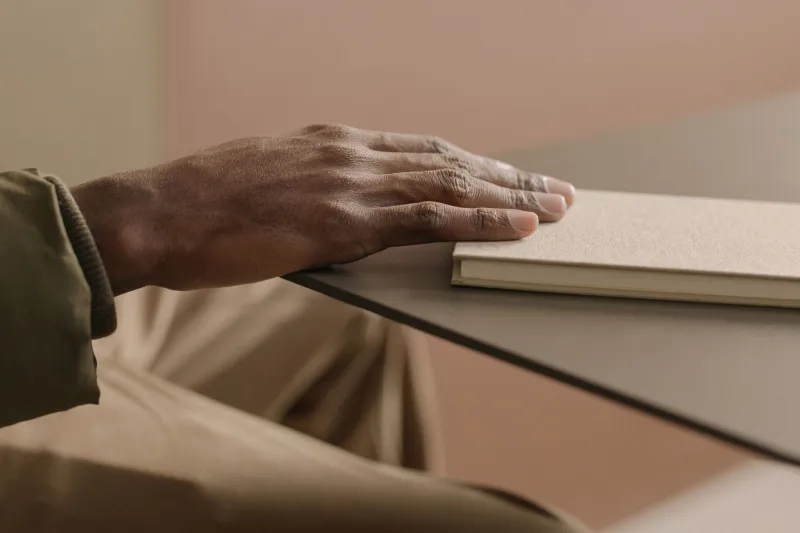
Photo by Photo by Peter Mammitzsch on Unsplash on Unsplash
Somewhere between your seventeenth Slack ping of the morning and the third Zoom call you didn't technically need to attend, something quietly radical happened. A card showed up in your mailbox. Handwritten. On thick, cream-colored stock. From your client in Denver.
You probably held it longer than you held your phone today.
That's not an accident. Across remote-first companies, distributed teams, and digital-native industries, the handwritten note is staging a quiet but unmistakable comeback — and this time, it carries a very different kind of weight.
When Everything Is Digital, Physical Becomes Rare
Rarity creates value. That's not a revolutionary idea, but it's one that's playing out in real-time across American workplaces.
When every message arrives in the same rectangular notification, nothing stands out. Emails, texts, Slack messages, LinkedIn DMs — they all compete in the same flat, frictionless space. The handwritten note, by contrast, requires someone to stop, choose paper, choose a pen, write something intentional, address an envelope, and actually mail it. That friction is the point.
"It signals that someone spent time on you specifically," says organizational psychologist Dr. Renata Osei, who studies communication behaviors in distributed teams. "In a remote environment where most interactions feel transactional and optimized, receiving something physical activates a completely different emotional response. People feel seen in a way that digital communication rarely achieves."
The psychology here runs deep. Research on haptic communication — the study of touch and physical sensation in human interaction — consistently shows that tangible objects carry emotional resonance that screens simply can't replicate. When you hold a note, your brain processes it differently than text on a display. It feels personal because it is personal.
The Executive Who Still Sends Cards
Talk to enough senior leaders in remote-heavy industries and a pattern emerges: many of the most respected ones still keep a box of notecards in their home office. Not for nostalgia. For strategy.
Marcus Delgado, a VP of Sales at a mid-size software company headquartered out of Austin, sends handwritten notes to clients after every major deal closes. He's been doing it for six years. "I had a client tell me they kept the note I sent them on their desk for three months," he says. "Three months. You think any of my emails lasted three months?"
Delgado is deliberate about his materials. He uses heavyweight correspondence cards — 110 lb stock minimum — with a subtle texture. "The paper matters. If it feels flimsy, it undermines the whole gesture. You're trying to say 'you're worth my time,' and then you hand someone a note that feels like it came from a drugstore birthday card. The message doesn't land the same way."
This is a sentiment echoed across industries. The quality of the paper isn't a trivial detail — it's part of the communication itself.
Premium Paper as a Brand Differentiator
Forward-thinking companies are formalizing what individual executives have been doing instinctively. They're building handwritten outreach into client relationships and employee appreciation programs, and they're investing in the materials to back it up.
A Brooklyn-based design consultancy recently overhauled its client onboarding experience. Every new client now receives a welcome package that includes a handwritten note from the lead designer on the account, printed on custom letterhead with a linen finish. The firm's creative director, Jamie Okonkwo, says the response has been striking. "Clients screenshot it and share it on LinkedIn. They mention it in the first meeting. It sets a tone that says we're thoughtful, we're detail-oriented, and we care about the relationship beyond the transaction."
Employee appreciation programs are seeing a similar shift. HR leaders at several remote companies report that handwritten recognition notes — sent to employees' home addresses — consistently outperform digital recognition in terms of emotional impact and retention-related sentiment scores. When your manager takes the time to write something by hand and mail it to your house, the signal is unmistakable: you actually matter here.
The Status Signal Nobody Talks About
Here's the thing about the handwritten note renaissance that doesn't get discussed enough: it's becoming a quiet status signal.
In professional circles where everyone is optimized to the hilt — productivity apps, automated follow-ups, AI-drafted emails — the person who sends a handwritten note is communicating something specific about themselves. They're saying they have the bandwidth to be intentional. They're saying they value the relationship enough to slow down. They're saying they understand that the best impressions aren't made at scale.
It's a form of professional restraint that reads, in the right contexts, as confidence.
"It's almost countercultural at this point," says Osei. "Which is exactly why it works. People respond to it because it stands out so sharply from the ambient noise of digital communication. It's not just a note — it's a choice."
How to Do It Right
If you're ready to bring handwritten communication into your remote work toolkit, the details matter more than you might think.
Start with the right paper. Weight and texture communicate quality before anyone reads a single word. Look for correspondence cards or notecards in 100–130 lb weight with a subtle texture — cotton or linen finishes feel premium without being ostentatious.
Keep it short and specific. Handwritten notes work because they feel personal. A generic "Thanks for your business!" defeats the purpose. Reference something specific — a conversation you had, a result they achieved, a detail that shows you were paying attention.
Mind the envelope. A beautiful note in a cheap envelope is like showing up to a great dinner in a wrinkled shirt. Match the quality. A heavier, well-constructed envelope signals that the whole experience was considered.
Be consistent, not constant. The power of handwritten notes comes from their rarity. Use them for moments that actually matter: deal closings, project completions, milestones, genuine thank-yous. If you send them for everything, they lose their impact.
In a remote-first world where most professional relationships exist primarily as text on a screen, the handwritten note is doing something quietly extraordinary. It's making people feel real to each other again. And it turns out, that's worth a lot.