Slow Down to Speed Up: The Unexpected Productivity Power of Paper's Built-In Resistance
We've spent the last two decades engineering friction out of our lives. One-click purchases. Auto-fill forms. Voice-activated everything. The assumption has always been that faster equals better — that removing obstacles between intention and action is the whole point of modern productivity.
But here's the thing nobody in the Silicon Valley optimization crowd wants to admit: some of that friction was doing real work.
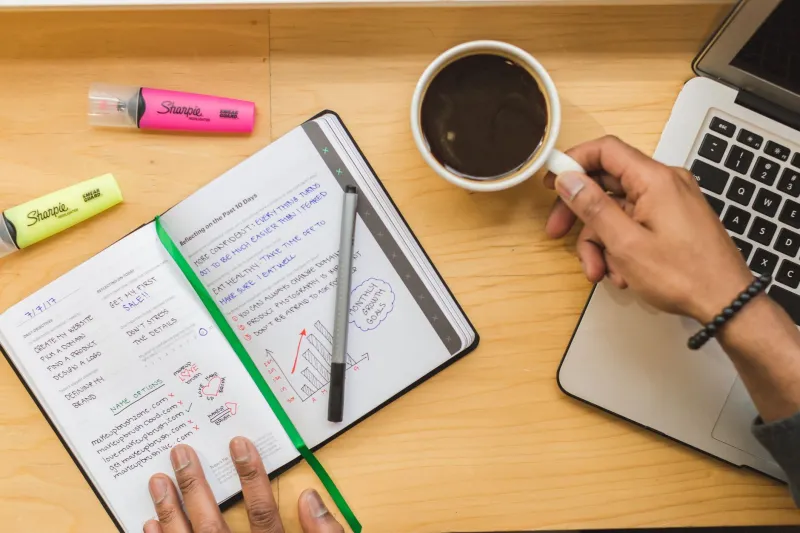
A quiet but growing movement among professionals — project managers, designers, writers, executives — is pushing back against the frictionless ideal. They're reaching for notebooks instead of apps, writing meeting notes by hand instead of typing them, and spending actual time choosing the right paper for the right task. And they're reporting something counterintuitive: slowing down is making them sharper, more focused, and better at making decisions.
The Problem With Effortless
Digital tools are genuinely incredible. Nobody's arguing otherwise. But there's a side effect to frictionless workflows that rarely gets discussed: when everything is equally easy to do, nothing feels worth doing carefully.
Think about the last time you opened a notes app. You probably typed fast, dumped everything in, and moved on. Now think about how much of that you actually remember, or acted on. The ease of capture doesn't automatically translate into clarity of thought.
Dr. Patricia Chen, a researcher who studies motivation and goal-setting at UT Austin, has written about how the effort involved in a task shapes how we value it. When something costs us a little — time, attention, physical energy — we engage with it more deliberately. We make better choices about what's worth doing.
Paper introduces that cost back into the workflow. And that's not a downside. That's the mechanism.
Decision Fatigue Is Real, and Analog Workflows Fight It
Here's a concept that doesn't get enough airtime in productivity conversations: decision fatigue. The mental exhaustion that builds up from making too many small choices throughout the day. Research consistently shows that the quality of our decisions degrades as the day goes on — not because we get dumber, but because we've spent our cognitive budget on a thousand micro-choices we barely noticed making.
Digital environments are decision-fatigue machines. Every app offers infinite options. Every document can be reformatted, reorganized, or deleted with two clicks. Every task manager lets you add, reorder, and reprioritize endlessly. The flexibility that's supposed to help you stay organized often just generates more low-stakes decisions that quietly drain your focus.
Paper doesn't work that way. When you write something down, it stays written. You can't drag and drop your to-do list into seventeen different configurations before settling on the one you had at the start. The permanence — the commitment — of ink on paper removes a whole category of small, energy-draining choices from your day.
Marcus Webb, a brand strategist based in Chicago who made the switch to a paper-based planning system three years ago, describes it this way: "I used to spend twenty minutes every morning reorganizing my task list in different apps. Now I write it down once and that's it. The list doesn't change until I cross something off. It sounds boring but it's genuinely freed up mental space I didn't know I was wasting."
The Ritual of Selection Is Part of the Point
One thing paper enthusiasts often mention — and skeptics sometimes roll their eyes at — is the experience of choosing the right notebook, the right pen, the right paper weight for a given task. From the outside, this looks like procrastination dressed up as aesthetic preference.
Look closer, though, and something more interesting is happening.
The act of selecting your tools is a form of intention-setting. When you pick up a specific notebook for a specific project, you're telling your brain something: this matters, I'm paying attention, I'm showing up for this. It's a low-tech version of what psychologists call "implementation intentions" — the mental practice of defining not just what you'll do, but how and with what.
Jamila Torres, a UX researcher in Austin who keeps paper journals for her qualitative research notes, puts it plainly: "Choosing a notebook isn't wasted time. It's the moment I decide I'm serious about the work. My laptop doesn't give me that. It just opens."
That's not a small thing. The transition ritual — opening a notebook, uncapping a pen, writing the date — signals a shift in mental state that digital tools rarely provide. Your laptop is the same whether you're shopping online or drafting a strategy document. Your dedicated project notebook is only ever for one thing.
Handwriting Slows Your Thinking Down to a Useful Speed
Typing is fast. Most people can type three to four times faster than they write by hand. For years, this was treated as an obvious advantage.
But research out of Princeton and UCLA has consistently shown that students who take notes by hand retain and understand material better than those who type — not because handwriting is magic, but because the speed difference forces a different kind of processing. When you can't transcribe everything verbatim, you have to decide in real time what's actually important. You summarize. You synthesize. You think while you write instead of after.
This applies well beyond the classroom. Professionals who write meeting notes by hand report that they come away with clearer action items and a better grasp of what was actually decided — not just what was said. The constraint creates the clarity.
Friction as a Filter
Here's the reframe that ties all of this together: friction isn't the enemy of productivity. Unnecessary friction is. There's a difference.
The friction of writing by hand, of committing to a paper planner, of choosing a notebook that fits the work — this friction is doing something. It's filtering. It's slowing you down at exactly the moments when slowing down produces better outcomes: when you're capturing ideas, setting priorities, planning your day, processing complex information.
The goal was never to go as fast as possible. The goal was always to do the right things, well. Sometimes the best tool for that is one that pushes back a little.
If you've been feeling scattered, overscheduled, and vaguely unproductive despite a full suite of digital tools, it might be worth asking whether the problem is too much friction — or not quite enough.
Your next notebook might be the most productive thing you buy this year.