Why the Margins Are Where the Real Thinking Happens
There's a particular kind of thinking that only happens in the margins.
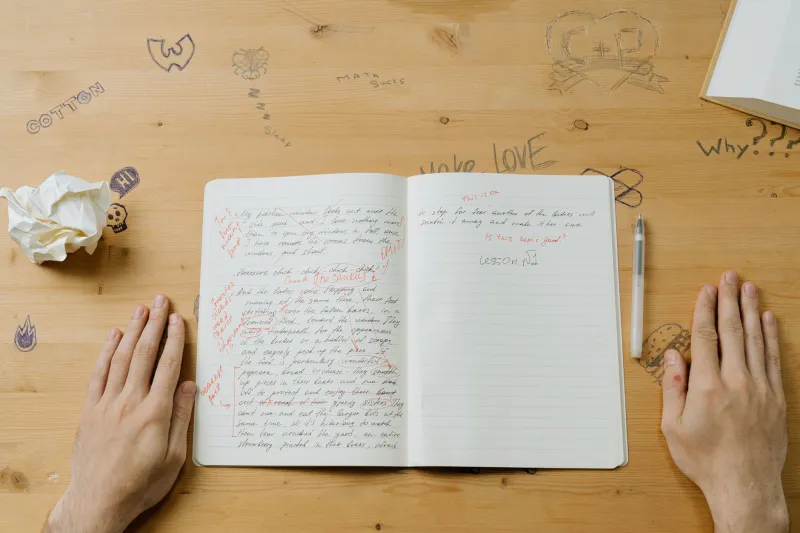
Not the polished, presentation-ready thinking. Not the kind you'd type into a shared doc or say out loud in a Zoom call. The margins are where the unfiltered stuff lives — the question marks, the circled contradictions, the "wait, does this actually make sense?" scrawled sideways in blue ink. And increasingly, professionals across the country are treating that space not as an afterthought, but as a deliberate strategic tool.
Call it the margin note revolution. It's quieter than most workplace trends, but it might be changing how smart people make decisions more than any app or productivity system out there.
The Psychology of Writing in the Margins
There's a reason ideas that feel too risky for a meeting room seem perfectly comfortable jotted in the white space of a document. Psychologists who study creative cognition have long noted that physical distance — even symbolic distance — lowers the psychological stakes of an idea. When you write something in the margin, it's not a formal position. It's a thought. It's provisional. It's allowed to be wrong.
That low-stakes framing turns out to be incredibly productive.
"The margin is the only place I feel like I can push back on my own assumptions," says Danielle Reyes, a brand strategist based in Austin who works with mid-size consumer goods companies. "When I'm reading a brief or a proposal, I'm annotating constantly. Not just summarizing — actually arguing with the document. And half the time, that's where my best client insights come from."
This isn't just a quirk of creative types. Behavioral researchers have found that handwriting activates different cognitive pathways than typing, encouraging slower, more evaluative processing. When you're forced to choose what's worth writing — because you only have so much margin space — you're naturally filtering for what actually matters.
Specific Techniques Worth Stealing
Not all margin annotation is created equal. Plenty of people scribble a vague asterisk and forget what it meant by Thursday. The professionals getting real value from this practice tend to follow a few consistent approaches.
The Devil's Advocate Mark. Chicago-based attorney Marcus Okafor uses a simple "DA:" notation whenever he reads something he suspects is too optimistic. "It stands for devil's advocate," he explains. "I write the strongest possible counter-argument right there in the margin, even if I don't believe it. By the time I've read through a whole contract or brief, I've essentially built a stress test of the whole document."
The Question Ladder. Designer and entrepreneur Priya Shenoy, who runs a packaging consultancy in New York, uses what she calls a question ladder — a series of increasingly specific questions written vertically down the margin of any document she's evaluating. The first question is broad ("Is this the right goal?"), and each one below it gets narrower until she reaches something actionable. "It forces me to not stop at the surface problem," she says.
Color-Coded Annotation. Some executives swear by a simple two-color system: one pen color for observations (what the document says), another for reactions (what you think about what the document says). Keeping those two things visually separate prevents the common mistake of confusing description with analysis.
The Parking Lot Column. Drawing a thin vertical line about an inch from the right edge of a page creates a dedicated "parking lot" — a column for ideas that are relevant but not directly connected to the current document. It's a way of capturing the associative thinking that good reading tends to trigger, without letting it derail your focus.
How Teams Are Making It Collaborative
Here's where things get interesting. Individual annotation is valuable, but some organizations are building shared annotation practices into their actual workflows — and finding that it changes the quality of group decision-making significantly.
One approach gaining traction in design and consulting firms is the "marked-up read" — a practice where team members each annotate a document independently before any group discussion takes place. The annotated copies are then shared or briefly presented before the meeting begins. The effect is something like crowdsourcing the pre-work: everyone arrives with their assumptions already examined, their questions already formed.
"We stopped doing cold reads in meetings entirely," says Jordan Whitfield, operations director at a mid-size architecture firm in Denver. "Now everyone gets the document two days early and marks it up on paper. When we sit down together, the conversation is just fundamentally smarter. People have already done the shallow thinking on their own, so we can go deeper together."
This approach also tends to surface dissenting views that might otherwise stay quiet in a group setting. When a concern is already written down on paper, it's easier to voice. The margin note gives it legitimacy.
Paper Matters More Than You'd Think
It's worth being direct about something: this practice works significantly better on paper than on screen.
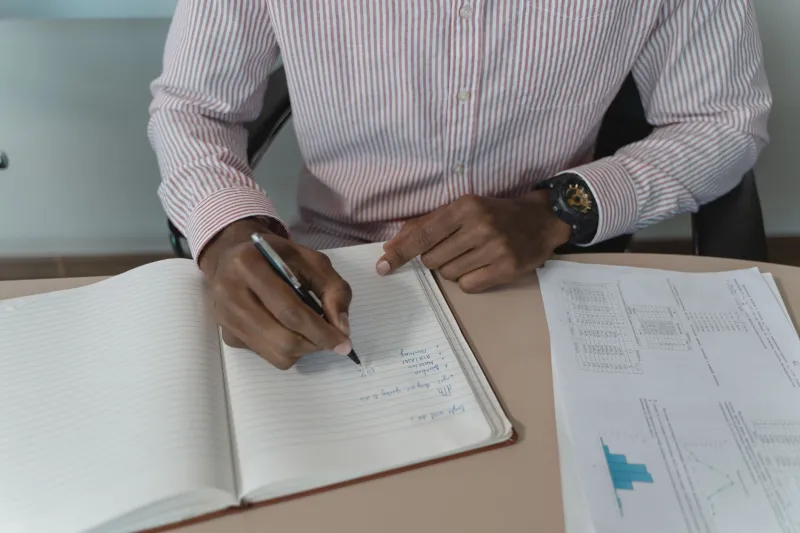
Digital annotation tools exist, and some are genuinely good. But there's consistent feedback from professionals who've tried both that physical margin notes engage them differently. Part of it is the tactile experience — the friction of pen on paper slowing you down just enough to think. Part of it is the absence of distraction that comes with working on a printed page rather than a screen with seventeen other tabs open.
And part of it is aesthetic. A well-chosen notebook or a cleanly printed document on quality paper creates an environment that feels worth engaging with seriously. This isn't a trivial point. The physical quality of your materials shapes your psychological relationship to the work.
At PaperKart, we'd obviously say that — but the professionals we talked to say it unprompted. The feel of the paper, the weight of the page, the way ink sits on the surface: these things affect how much care you bring to the reading.
Making the Habit Stick
If you want to build a margin annotation practice that actually holds, a few things help.
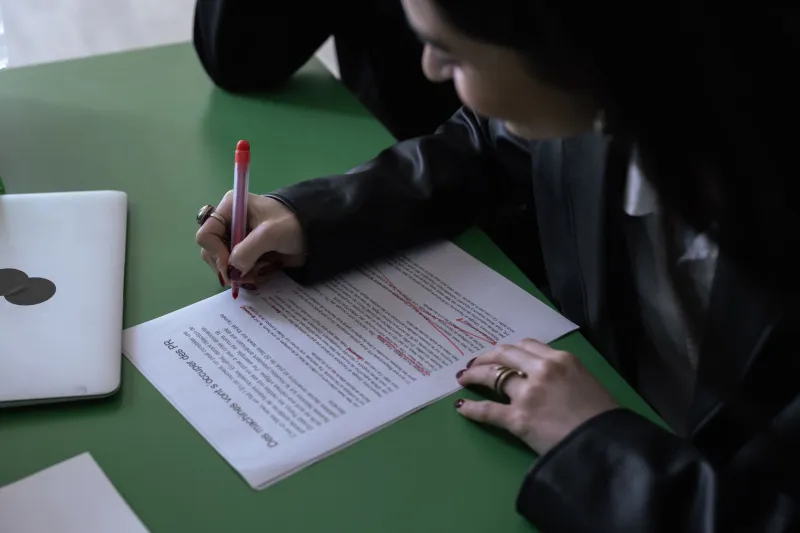
First, print more than you think you need to. Documents that live only on screen rarely get the same quality of attention. If something is worth deciding on, it's probably worth printing.
Second, keep a dedicated pen for annotation — something that feels good to write with, distinct from your everyday pen. The ritual of switching to that pen signals to your brain that you're in evaluation mode, not just reading mode.
Third, build in a review step. The margin notes are only valuable if you return to them. Set a five-minute window after any major annotated read to flip back through and pull out the two or three insights worth keeping.
The margins have always been there. Most of us just haven't been paying attention to what they're trying to tell us.