If It's Not on Paper, Did It Even Happen? Building a Business Documentation System That Has Your Back
There's a moment every business owner dreads. It usually involves a lawyer, an auditor, or a very uncomfortable conversation with a client — and the phrase "do you have that in writing?" hanging in the air like a bad smell.
In an era where everything feels like it lives in the cloud, it's easy to assume your digital records have you covered. Emails, shared drives, e-signatures — surely that's enough. But a growing number of US businesses, from small creative studios to mid-size professional services firms, are quietly building something older and more deliberate alongside their digital systems: an intentional paper trail.
Not because they're Luddites. Because they've learned the hard way — or watched someone else learn it — that paper has a kind of permanence digital files can't always guarantee.
Why Paper Still Carries Legal Weight
Let's be clear: digital records are legally valid in most contexts, and this isn't an argument to abandon your cloud storage. But paper documentation offers something specific that screens struggle to replicate — a fixed, tamper-evident record that exists independent of any platform, software version, or server status.
When a contract dispute lands in front of a judge, a signed physical document with a date stamp carries a certain undeniable weight. When an OSHA inspector walks through your facility, a physical logbook of safety checks is harder to question than a spreadsheet that could theoretically have been edited five minutes ago. When a long-term employee leaves and institutional knowledge walks out the door with them, a binder of documented procedures doesn't disappear with their login credentials.
Paper doesn't require a password reset. It doesn't go offline during a data breach. It doesn't get accidentally deleted when someone cleans up shared storage.
The Psychology of the Physical Record
Here's something that doesn't get talked about enough: there's a confidence that comes from holding documentation in your hands.
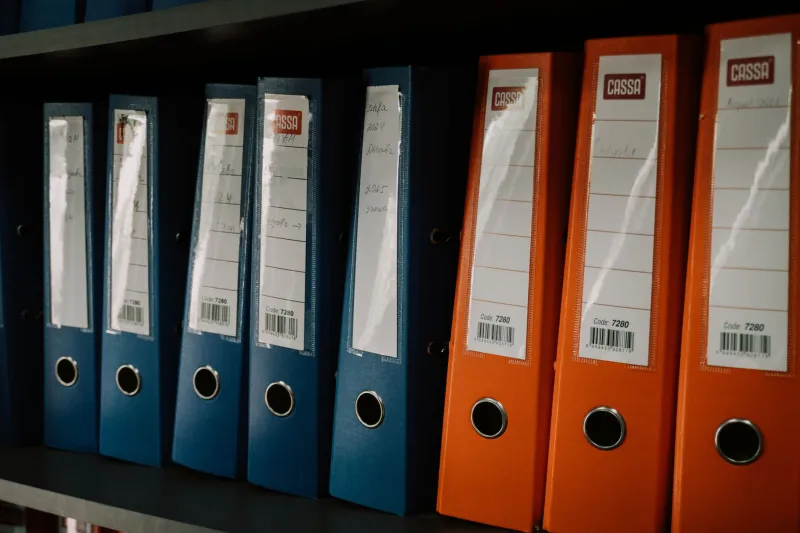
Business owners who maintain parallel paper systems often describe the same feeling — a kind of operational calm that comes from knowing the critical stuff exists in a form that's tangible, findable, and unambiguous. You can hand it to someone. You can point to a shelf and say "that binder, third from the left." That clarity matters more than most people admit.
There's also a behavioral effect on the people creating the records. When employees know that something will be printed, signed, dated, and filed — not just typed into a field and auto-saved — they tend to be more deliberate about what they're documenting. The physical act of committing something to paper raises the stakes just enough to sharpen attention.
What Actually Belongs in Your Paper System
Not everything needs to be printed. The goal isn't to recreate your entire digital infrastructure on dead trees — it's to identify the categories of documentation where paper adds genuine protection or clarity.
A few areas where businesses consistently find paper earns its keep:
Contracts and Agreements — Client contracts, vendor agreements, NDAs, and partnership terms. Keep signed physical copies in a dedicated, clearly labeled filing system. Yes, even if you also have a DocuSign version.
HR and Personnel Records — Offer letters, performance reviews, disciplinary documentation, and acknowledgment forms for policies. Employment law disputes often hinge on paper trails, and having originals matters.
Compliance and Regulatory Logs — If your industry has reporting requirements — food safety, financial compliance, workplace safety — a physical logbook that's maintained in real time is harder to dispute than a digital record with an edit history.
Meeting Notes and Decisions — Not every meeting, but the ones where significant decisions get made. A signed summary of what was agreed upon, by whom, and when can prevent a lot of "I thought we decided" conversations later.
Financial Source Documents — Invoices, receipts, bank statements. The IRS has specific guidance on record retention, and having physical backups of key financial documents is a practice that accountants still quietly recommend.
Setting Up a Hybrid System That Actually Works
The mistake most businesses make when they try to add paper documentation is that they treat it as an afterthought — a backup for the backup. That approach creates chaos fast. The goal is integration, not duplication for its own sake.
Start with a simple framework:
Define your critical categories. What are the five to ten types of records where physical documentation would genuinely protect your business? Start there. Don't try to paper-ify everything at once.
Create a consistent labeling and filing system. This sounds boring because it is, but it's also the difference between a documentation system and a pile of paper. Invest in quality file folders, label makers, and sturdy binders. A well-organized filing cabinet communicates professionalism — to employees, to auditors, to yourself.
Establish a retention schedule. How long does each category of document need to be kept? Federal and state requirements vary. Work with your accountant or attorney to define retention periods for each document type, and build a regular purge schedule so your system stays usable.
Assign ownership. Someone needs to be responsible for maintaining the paper system. If it's everyone's job, it's no one's job. Designate who files what, and build it into your standard operating procedures.
Cross-reference with digital. The hybrid approach works best when your paper and digital systems talk to each other — at least informally. A note in your project management software that says "signed contract filed in client folder, cabinet 2" takes ten seconds and saves hours of searching later.
The Supplies That Make It Sustainable
A documentation system is only as good as its materials. Flimsy folders fall apart. Cheap binders warp. Thermal paper receipts fade within a year, which is a problem if you're counting on them for a five-year audit.
For documents you're keeping long-term, acid-free paper and archival-quality folders make a real difference. For day-to-day filing, a consistent supply of durable, clearly labeled folders and binders keeps the system from becoming a source of frustration. The small investment in quality materials pays off the first time you need to pull a document quickly under pressure.
The Real Competitive Advantage
There's a version of this conversation that's purely defensive — about lawsuits and audits and things going wrong. But the businesses that do this well will tell you the benefits show up long before anything goes sideways.
A well-documented operation runs more smoothly. Onboarding new employees is faster when procedures are written down and findable. Client relationships are cleaner when expectations are documented and signed. Leadership transitions are less chaotic when institutional knowledge lives somewhere other than the outgoing manager's head.
A paper trail isn't just protection against disaster. It's infrastructure for growth.
So the next time someone asks if you have that in writing — you should be able to walk to a shelf and show them.